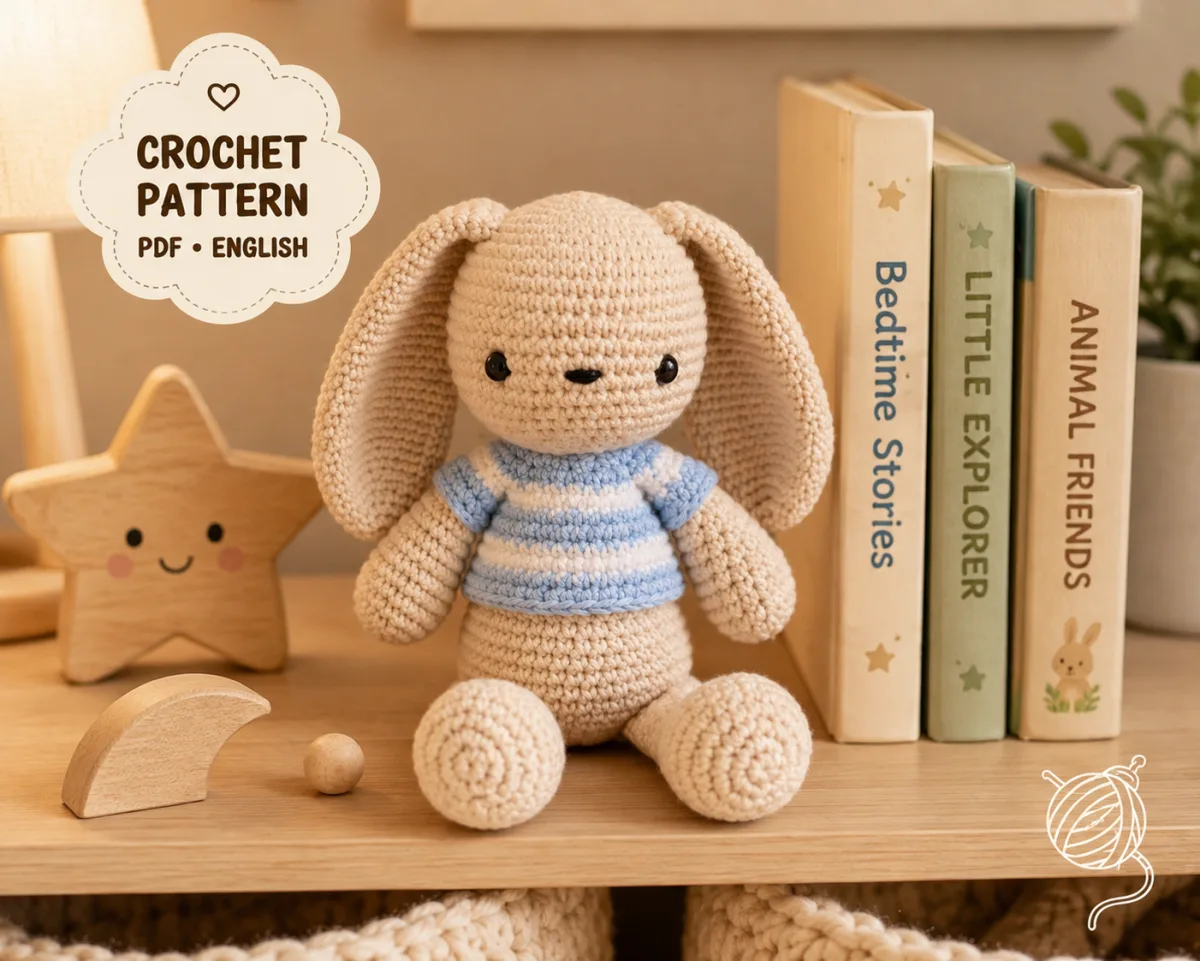
What are safety eyes?
Safety eyes are plastic craft eyes with a post that passes through crocheted fabric and a washer that locks onto the post from inside the stuffed piece. They create a clean, consistent expression without embroidery. Despite the name, they are small components and are not appropriate for every recipient, particularly children under three.
How do safety eyes work?
Push the post through the chosen gap between stitches while the head is still open. From inside, press the locking washer onto the post with its gripping side facing the eye. The washer is designed to resist removal, so test the position of both eyes before attaching it. Follow the eye manufacturer’s directions because washer shape and installation can vary.
Safety eyes are installed before the piece closes
The post passes between crochet stitches and a washer locks onto it from inside. Follow the pattern’s round and spacing guidance while the head is still open. Once the decreases make the opening too small for your hand, the backs are difficult or impossible to fit correctly.
Test placement before attaching the washers
Insert both posts without washers, step back, and view the face from several angles. Moving an eye by one stitch or one round can change the expression. Mark the chosen holes, remove the posts if needed, and only then secure the backs.
Match eye size to yarn and character
A pattern’s recommended millimetre size is based on its sample yarn, hook, and proportions. Thicker yarn usually needs larger eyes. If you change yarn weight, hold several sizes against the unfinished face before committing.
Safety eyes are not safe for every recipient
Plastic eyes and other small parts can be choking hazards. For children under three—or whenever a securely child-friendly result is required—embroider the eyes with yarn instead. Reinforce every seam, remove loose ends, and follow the safety guidance in the individual pattern.
Embroidered-eye options
A small horizontal stitch creates a sleepy expression, while a compact satin-stitched oval resembles a classic toy eye. Use a blunt yarn needle, anchor the yarn securely inside the head, and avoid beads or glued decorations when small-part safety matters.