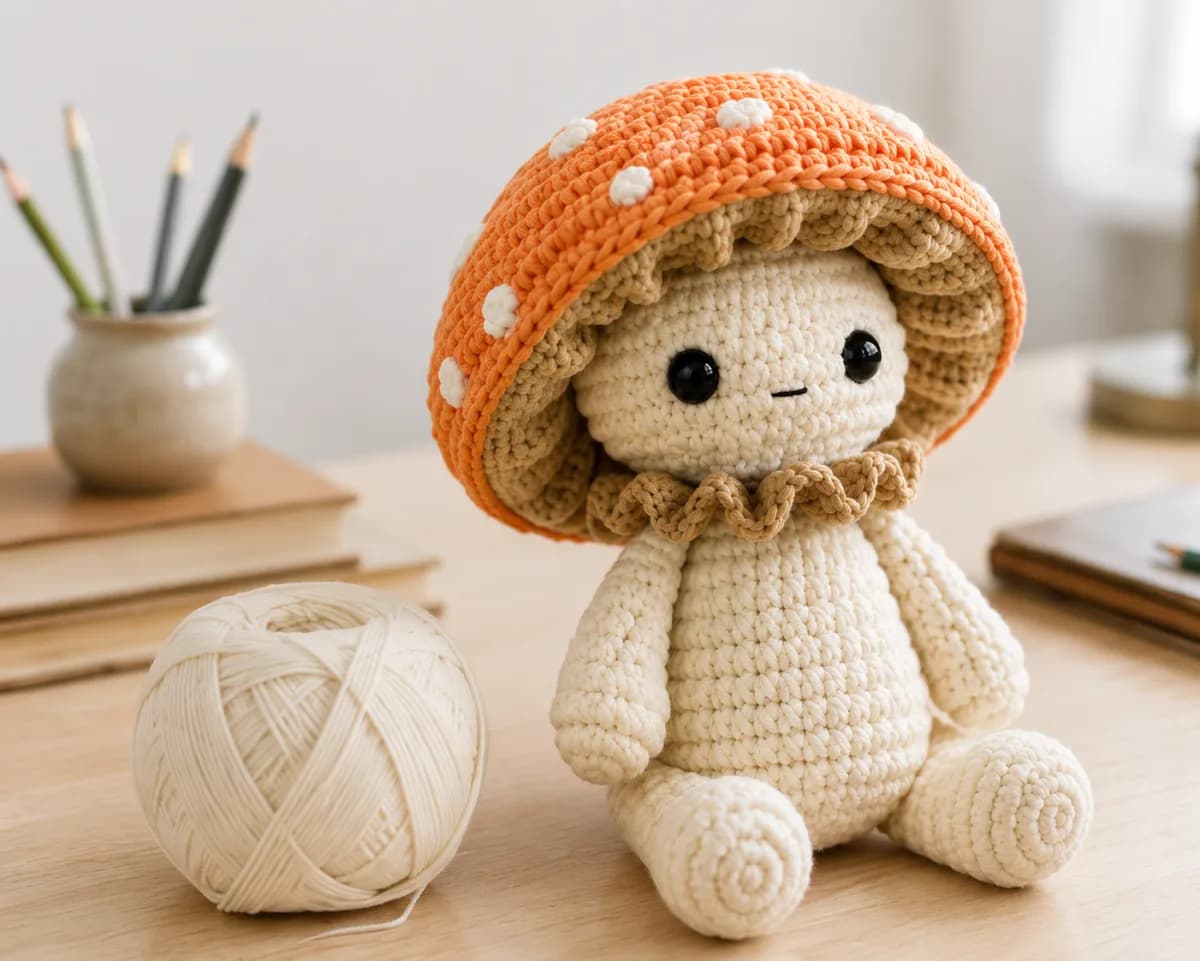
Start with the pattern recommendation
The yarn named in a crochet pattern is the safest starting point because its weight, texture, and behavior influenced the finished sample. If that yarn is unavailable, look for a substitute in the same yarn-weight category with a similar fiber composition and feel.
Choose a fiber that suits the project
Smooth cotton makes stitches easy to see and often gives small amigurumi a crisp shape. Acrylic is widely available, comes in many colors, and can feel softer or more forgiving. Blends sit between those qualities. Very fluffy, fuzzy, or novelty yarn can be beautiful, but it hides stitch definition and may be harder for a beginner to count.
- Choose smooth yarn when clear stitch definition matters.
- Consider care instructions if the finished piece may need washing.
- Use the same fiber family across colors when you want consistent tension and texture.
Match weight before color
Two yarns can look similar in the skein but produce different-sized stitches. Compare the weight category and the manufacturer’s recommended gauge, then crochet a small sample. For amigurumi, the fabric should be firm enough that stuffing does not show through, without becoming painful to work.
Buy enough from the same dye lot
Handmade projects use less yarn than many garments, but exact yardage still varies with tension and substitutions. Check the pattern requirements and allow a little extra. When color consistency matters, buy skeins from the same dye lot and keep the labels until the project is finished.
Make one change at a time
Changing yarn weight, fiber, and hook size together makes the result difficult to predict. Begin with the pattern’s hook recommendation, test your fabric, and adjust only if necessary. A small swatch—or the first few rounds of a toy—can save time before you commit to the full project.