What crochet gauge measures
Gauge states how many stitches and rows fit within a measurement, commonly 10 × 10 cm or 4 × 4 inches. It connects the designer’s written stitch counts to the finished dimensions. Two crocheters can use the same yarn and hook yet produce different gauge because their tension and stitch formation differ.
Make a useful swatch
Crochet a sample larger than the measurement area so edge stitches do not distort the result. Use the pattern stitch—not plain single crochet unless that is the actual fabric. Wash and dry the swatch as you will treat the finished project, then measure across the relaxed centre.
Adjust the hook logically
If you have too many stitches within 10 cm, your stitches are too small; try a larger hook. If you have too few, your stitches are too large; try a smaller hook. Change one factor at a time and make another swatch. Choosing a different garment size does not correct gauge because it also changes proportions.
Gauge for garments
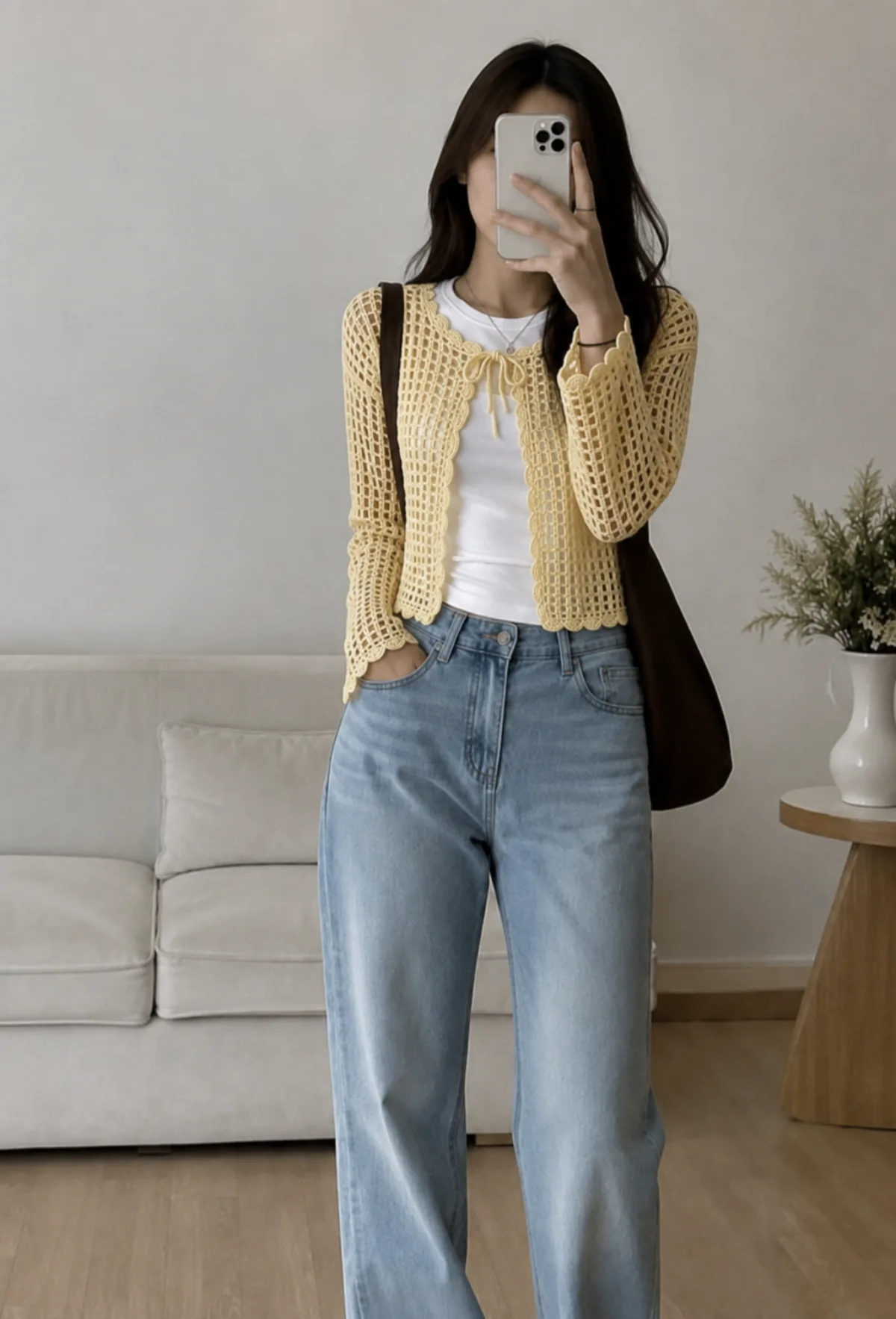
Garment gauge controls bust width, sleeve circumference, length, drape, and yarn usage. Choose a size using the pattern’s finished measurements and intended ease only after matching gauge. A lightweight mesh cardigan can grow after washing, making the blocked measurement especially important.
Gauge for amigurumi
Exact dimensions are often less critical for a toy, but fabric density still matters. The stitches should be firm enough that stuffing does not show through. If there are gaps, try a smaller hook before pulling every stitch painfully tight. Use one yarn weight across connected pieces so they fit together.
Record what worked
Write the yarn, hook, washed measurement, and any adjustments in the pattern notes. That record is valuable when you make the project again or substitute a different colour from the same yarn line.